Best Food Halls in Minneapolis, Tried and Tested
We toured the counters, weighed the lines, and figured out which Minneapolis food halls actually earn a repeat trip versus which ones just have good lighting.
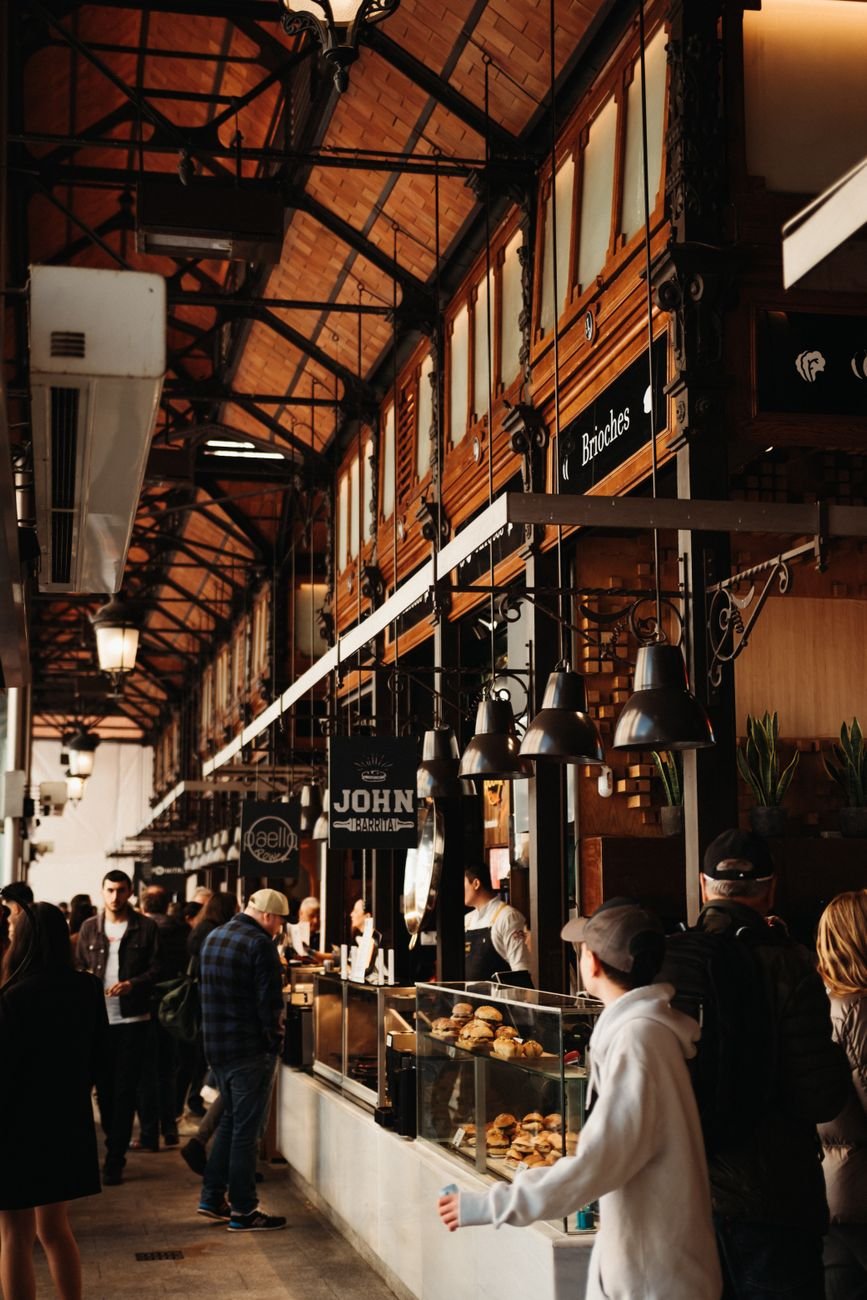
Walk into Midtown Global Market on a Tuesday night in January and the first thing you notice isn't the cold you just left outside. It's the noise: Somali, Spanish, Hmong, and Minnesota-accented English overlapping under one steel-trussed roof that used to hold a Sears catalog counter. Someone's grinding fresh spices two stalls down from a bakery case of French pastries. A toddler in a snowsuit is working through a mango on a stick. This is the case for the best food halls in Minneapolis: they aren't food courts with better lighting. They're the closest thing this city has to a public square, and Minneapolis has quietly built a handful of them worth your attention.
Where to Find the Best Food Halls in Minneapolis
Geography matters here more than in most cities, because Minneapolis and St. Paul are genuinely different places with different food cultures, and lumping them together is how visitors end up disappointed. The city's food hall energy clusters in a few distinct pockets. The Lake Street corridor, anchored by Midtown Global Market, carries the deepest immigrant food history in the city, built by and for the East African, Latino, and Southeast Asian communities who call that stretch home. North Loop, all exposed brick and old cold-storage warehouses, has adapted the format for a younger, design-forward crowd with a beer list to match. Smaller, satellite-style market spaces have popped up near the university and in pockets of Northeast, riding the same warehouse-adjacent aesthetic that made Nordeast breweries a destination in the first place.
None of these neighborhoods are interchangeable, and a good food hall reflects the block it sits on. That's the difference between a great hall and a mediocre one: the mediocre version could be dropped into any city in the country. The good ones could only exist here.
What Actually Makes a Food Hall Worth Your Time
A building full of counters selling food isn't automatically a food hall worth visiting. A handful of things separate the ones that earn a return trip from the ones that don't.
- Vendor diversity that goes beyond three variations on the same burger and fries
- Seating that encourages you to linger rather than eat standing up and leave
- A bar or taproom component, since a shared drink list does more to make strangers share a table than anything else
- Easy transit or bike access, since a food hall that only works if you drive and park defeats its own purpose as a gathering place
- A mix of established vendors and newer ones testing concepts, so the lineup shifts instead of settling into place
The best halls also tend to have an anchor tenant or two that people specifically travel for, plus a rotating cast that rewards regulars for coming back. If everything on the roster has been unchanged for five years, that's a sign the operator has stopped paying attention.
Midtown Global Market and What Followed
Midtown Global Market deserves its reputation as the original template, and its location matters as much as its food. It sits in a building that once anchored Lake Street's retail corridor, and after the corridor took real damage in 2020, the market became one of the visible signs of the street coming back. It's worth eating there for the East African food alone; the Twin Cities have one of the largest Somali populations in the country, and that community's cooking, from sambusas to slow-cooked stews built on berbere and cardamom, is not a side note to Minneapolis food culture. It's central to it, in the same way a good Juicy Lucy is central to the city's burger identity even though neither dish would show up on a coastal best-of-Midwest list drawn up by someone who's never spent a winter here.
What followed Midtown wasn't imitation so much as adaptation. North Loop's version leans into its warehouse bones and craft beer credentials. The newer, smaller-format spaces near campus and in Nordeast's warehouse district borrow the shared-seating, multiple-vendor structure but scale it down to fit a single converted storefront instead of a former department store.
How to Order Like You've Been Here Before
Food halls reward a specific kind of strategy. Go hungry enough to order from three stalls, not just one. Split dishes with whoever you're with instead of each person committing to a full meal at a single counter; the entire point of the format is sampling across cuisines in one sitting. Skip the stall with the longest line on reflex, since a long line at 6:30 on a Friday often just means everyone else had the same first instinct you did. Ask what's fresh or what just came out, especially at counters doing scratch cooking in small batches. Go on a weekday afternoon at least once, not just for weekend dinner, because a half-empty hall on a Tuesday tells you more about the food's real quality than a packed one on Saturday night ever will.
Winter doesn't actually change any of this advice, which is refreshing on its own. A good food hall works in July and works in February, because the whole point is that you're inside, at a shared table, eating something someone's grandmother taught them to make, while the person next to you eats something from an entirely different continent. That's not survival. That's just what a meal out in this city looks like when it's done right.