Best Italian Restaurants in Minneapolis Worth the Trip
Italian cooking in Minneapolis has gotten serious. Here's how to find the kitchens that actually mean it.
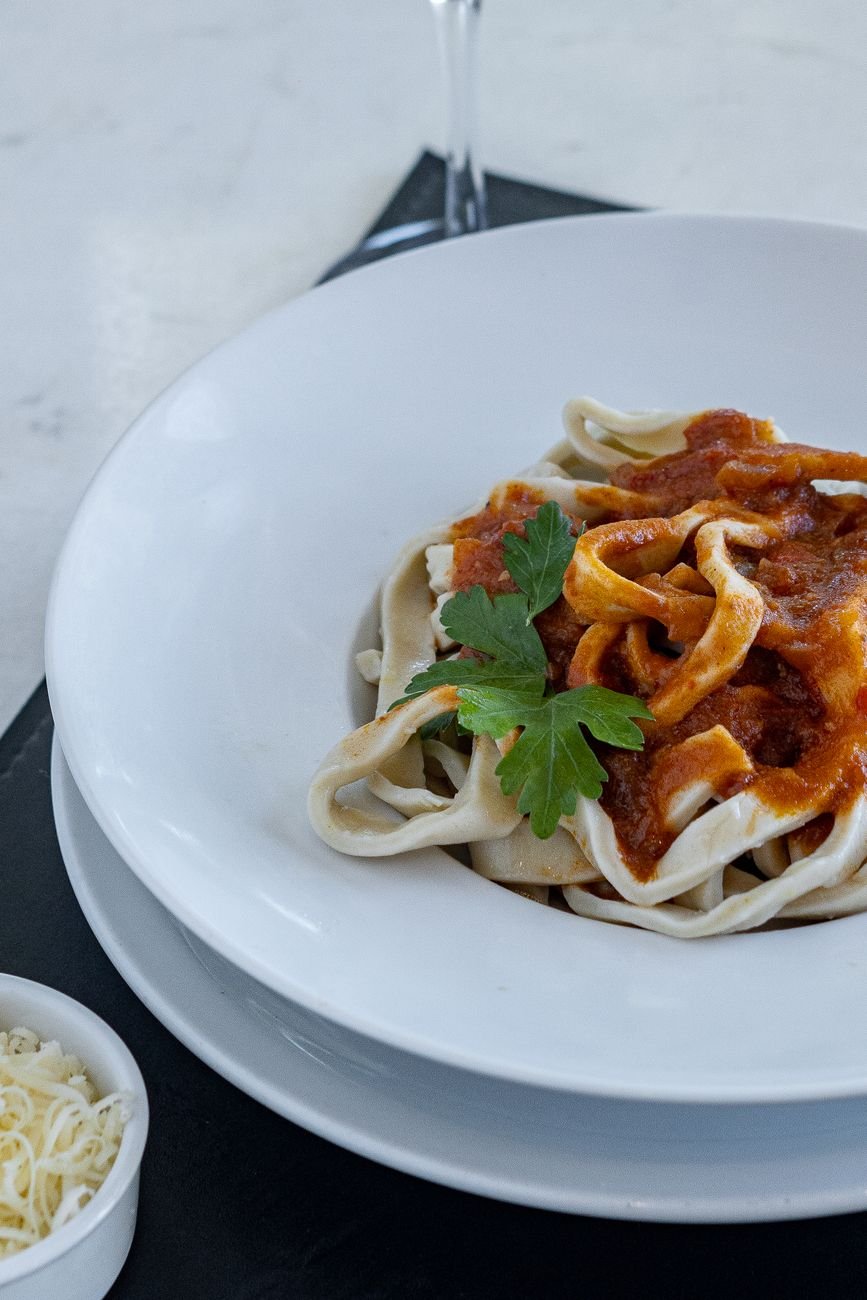
The surest sign that a city's Italian food scene has matured isn't the arrival of a celebrity chef or a splashy new reservation system. It's the moment you sit down, order something simple (a plate of pasta with brown butter and sage, maybe, or a roasted half-chicken with pan drippings) and realize the kitchen didn't feel the need to explain itself. That moment is happening more often in Minneapolis. The best Italian restaurants in minneapolis right now are the ones that treat restraint as a virtue, not a limitation.
It's a harder standard than it sounds. Italian cooking is arguably the most imitated and most diluted cuisine in America. The category runs from Sunday-gravy red-sauce houses to modernist tasting menus to fast-casual pasta bowls, and most of what fills the middle is competent at best. Minneapolis has all of those tiers. The food worth your time and money lives at the edges: the places that have made a clear decision about what kind of Italian cooking they want to do and then executed it with discipline.
How to Find the Best Italian Restaurants in Minneapolis
Geography matters. North Loop, which spent the last decade converting warehouse space into some of the city's most interesting restaurants, has attracted Italian-leaning kitchens that share the neighborhood's design-forward sensibility: small menus, considered wine lists, rooms that take lighting seriously. Northeast, with its older immigrant working-class bones and its current life as an arts and brewery district, tends toward something rougher and more generous, with bigger portions, louder rooms, and pasta that arrives in quantities suggesting the cook doesn't trust you to order enough.
Neither is better. They're different expressions of the same impulse, which is to take regional Italian cooking seriously in a northern city where the seasons are brutal and the local larder is built around root vegetables, freshwater fish, and very good dairy.
What Regional Italian Actually Means on a Menu
Most Americans encounter Italian food as a kind of averaged-out national cuisine, which is a fiction. Italy is a country of twenty regions with distinct culinary traditions that barely overlap. Emilia-Romagna (Bologna, Parma, Modena) is the land of fresh egg pasta, cured pork, and aged cheese. Campania is tomatoes, dried pasta, wood-fired pizza. Liguria is olive oil and pesto. Calabria is chile heat and preserved fish. Sicily is Arab-influenced, sweet-sour, heavy with pine nuts and citrus.
A kitchen that knows what it's doing will signal its regional allegiance early. If the pasta section lists tortellini en brodo alongside hand-rolled tagliatelle with meat ragù, you're likely in Emilia-Romagna territory. An antipasto page that leans on fried things, pickled vegetables, and salt-cured fish suggests the kitchen is thinking about the south. Pay attention. A menu that mixes conventions from five different regions without apparent reason is usually a menu built around what the chef thinks customers want rather than what the cuisine actually demands.
In Minneapolis, the Emilian tradition has the strongest foothold, probably because fresh egg pasta is a natural fit for a city that knows how to handle cold-weather cooking. A good fresh pasta program requires daily production, expensive equipment, and cooks who take the work seriously. When a kitchen does it well, the silky sheets that hold sauce without going slack tell you immediately. When they don't, the noodles taste like something that sat in plastic wrap too long.
The Pasta Test and Other Signals
Order pasta as a first course, not a main. That's how it's served in Italy, and kitchens that understand Italian structure will portion it accordingly: enough to satisfy without overwhelming what comes after. A restaurant that serves pasta exclusively as an entree-sized bowl isn't wrong, exactly, but it's telling you something about its priorities.
Look at what the kitchen does with offal and secondary cuts. Braised oxtail, chicken livers, and lamb neck are the cuts that define Italian cucina povera, the poor kitchen that became the basis of the world's most influential food culture. A menu that lists only safe proteins (chicken breast, salmon, ribeye) with Italian seasonings attached is not an Italian restaurant in any meaningful sense. It's American food with an accent.
The bread service matters more than it used to. A serious Italian kitchen either makes its own bread or has a strong relationship with a local bakery. A basket of warm focaccia, aggressively salted and dimpled with olive oil, is a credible opening statement. A basket of industrial dinner rolls is a warning.
Walleye, Bde Maka Ska, and the Case for Local Italian
One of the more interesting developments in Minneapolis Italian cooking is the way some kitchens have started treating local ingredients not as a novelty but as a logical extension of Italian technique. Walleye, the fish that defines the region's freshwater tradition, is a natural fit for preparations from the Veneto and the Italian lake districts, where freshwater fish has always been cooked simply, with olive oil and herbs, without apology. A few kitchens have committed to this seriously, and the results are persuasive.
The logic is sound. Italian cooking has always been rooted in what's local and seasonal. The idea that it requires specific imported ingredients to be authentic misreads the cuisine's actual history. What it requires is technique, proportion, and the discipline to leave things alone when they're already good. A seared walleye fillet with brown butter, capers, and lemon doesn't need a provenance story. It needs to be cooked at the right temperature and served immediately.
Spring and early summer are good times to eat Italian in Minneapolis. The local produce starts arriving (ramps, morels, pea shoots, the first tomatoes) and kitchens that know what they're doing build their menus around what just came in rather than what they ordered six weeks ago. A restaurant that changes its menu seasonally is signaling something important about how it operates. One that hasn't updated its pasta section since autumn is probably not making its own pasta.
What to Order, and What to Skip
Skip the chicken Parmesan. Not because it's bad, since a properly made chicken Parm is a magnificent thing, but because it's what every Italian-American restaurant in America defaults to when it runs out of ideas. A kitchen doing something interesting will put that dish on the same page as the others that look slightly unfamiliar.
Order the soup if there is one. Broth-based soups are labor-intensive and easy to cut corners on. A kitchen that bothered will give you a broth that's clear and deep and built over several hours. A thin or muddy one gives itself away by the second spoonful.
For wine, lean toward Italian labels rather than defaulting to Californian. This isn't snobbery. Italian wine and Italian food were designed for each other over centuries, and the acidity in Barbera d'Asti or Verdicchio cuts through fat and cream in a way that Napa Cabernet rarely does.
The short version: in a city that takes its food more seriously than it takes credit for, the best Italian cooking is happening in kitchens that have made specific choices and stuck to them. Find the menu that knows what region it's cooking from. Find the pasta that was made that morning. Find the room where nobody is performing authenticity, where they're just cooking. That's where you want to be.