Uptown Neighborhood Guide, Block by Block
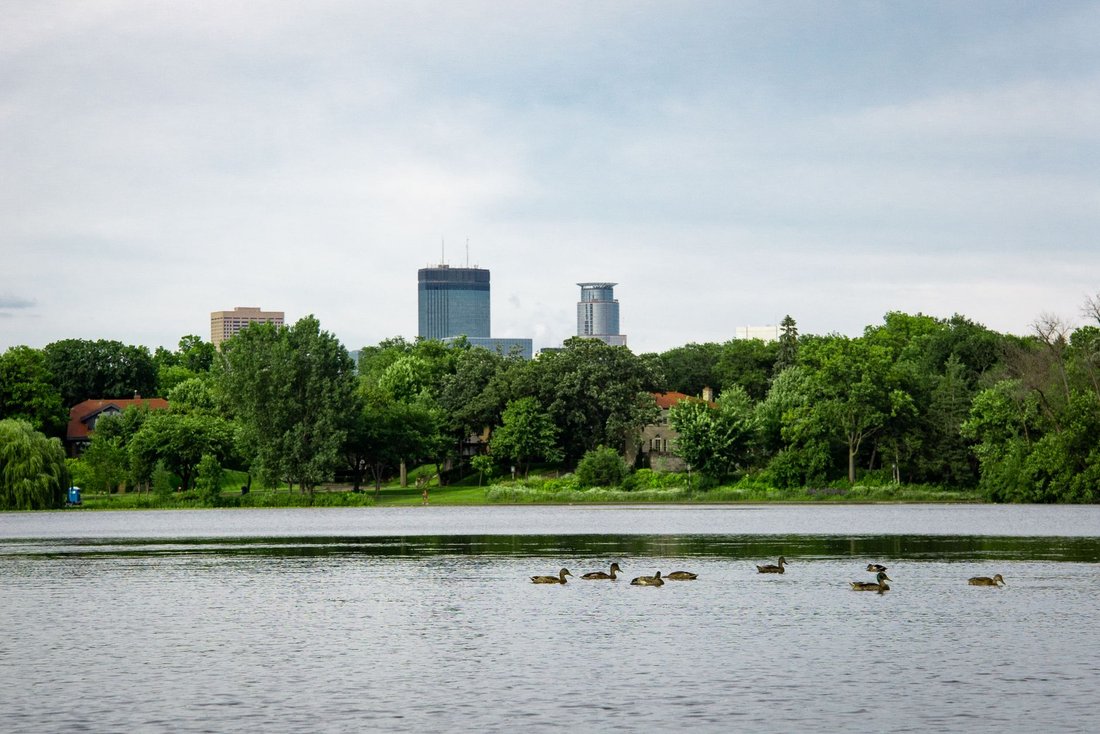
Uptown's bohemian past and its retail churn sit within blocks of Bde Maka Ska, Lake of the Isles, and the Midtown Greenway.
On a Tuesday morning in January, the marquee outside a shuttered storefront near Hennepin and Lake still advertises a sale that ended two winters back, while forty feet away a line forms for coffee before the sun clears the roofline. That contradiction, half vacancy and half hustle, is the honest starting point for any uptown neighborhood guide, because Uptown has never held still long enough to be one thing. It was bohemian before it was retail, and it is figuring out what comes after retail right now, in real time, block by block.
Locals measure Uptown less by a boundary line than by what borders it. Bde Maka Ska sits to the west, Lake of the Isles to the north, and the Midtown Greenway cuts through underneath it all, a former rail trench turned bike commuter artery that carries more of the neighborhood's daily life than any storefront does. Ask someone who grew up here what Uptown means, and they will probably start talking about water and bikes before they mention a single shop.
An Uptown Neighborhood Guide Starts at Hennepin and Lake
The intersection of Hennepin and Lake is still the neighborhood's center of gravity, even though its retail anchor has changed shape more than once. For a generation, a shuttered Kmart blocked Nicollet Avenue from running straight through the area, a strange civic scar that the city eventually healed by tearing the store down and reopening the street. That change, small on a map, pointed to something larger about where Uptown was headed: less reliant on one big-box draw, more built around a grid of smaller storefronts, patios, and sidewalks meant for walking rather than parking.
Hennepin Avenue runs the neighborhood's spine, lined with restaurants and bars, plus the music venues that keep Uptown's nightlife reputation mostly intact even as the daytime retail mix keeps turning over. Lyndale Avenue, a few blocks east, has quietly become the calmer sibling, heavier on coffee shops than on anything built for a Friday night. Lake Street, running east-west, ties Uptown into the wider corridor of Twin Cities life, including the East African-owned restaurants and markets that have reshaped Lake Street's identity for miles in either direction. Uptown does not get enough credit for how directly it connects to that influence. Walk or bike far enough down Lake Street and the neighborhood's version of global food culture becomes obvious fast.
The Lakes and the Greenway Still Run the Place
Strip away the storefronts and Uptown is a neighborhood organized around water and a bike trail. Bde Maka Ska, the name restored after Lake Calhoun's was retired, draws runners and picnic blankets the moment the ice is off, paddleboarders too, and its walking path functions as the neighborhood's real living room more than any bar does. Lake of the Isles, quieter and more residential, rewards the slower lap past the kind of grand old houses that made this part of the city desirable a century before anyone called it Uptown.
Then there is the Greenway trail, sunk below street level and largely free of car traffic, which turns a commute into something closer to a straight shot across the city. Locals use it to get to work, to bar-hop without driving, and to skip the intersections above entirely. Any conversation about what makes Uptown livable, as opposed to just visitable, circles back to the Greenway within a sentence or two.
Food, Beer, and the Juicy Lucy Question
No accounting of Uptown avoids the Juicy Lucy, the cheese-stuffed burger that Minneapolis claims as a genuine local invention and defends the way other cities defend a sports team. Uptown has its share of places chasing a proper Juicy Lucy, molten center included, and the debate over which bar does it best functions as a civic sport more than a menu question.
Craft beer carries similar weight here. Taprooms in and around Uptown treat beer with the seriousness other neighborhoods reserve for wine lists, and the crowd skews toward people who can tell you exactly what hop varietal they are drinking and why it matters. It fits a neighborhood that has always taken its culture seriously, whether that culture shows up in a pint glass, a chord progression, or a black box theater with forty seats.
What to look for, block by block
- Around Hennepin and Lake: the widest mix of restaurants, live music, and the neighborhood's densest foot traffic after dark.
- Along Lyndale: independent coffee shops and lower-key bars, better for a slow afternoon than a big night out.
- Toward Lake of the Isles: quiet streets, older housing stock, and the calmest lakeside walk in the neighborhood.
- On the Greenway itself: bike traffic, murals, and access points that drop you into the neighborhood from below street level.
- East along Lake Street: the clearest look at how East African-owned businesses have shaped this whole corridor of the city.
A Neighborhood That Keeps Rewriting Its Own Reputation
Uptown's bohemian reputation was earned honestly, built by decades of independent bookstores and music clubs, secondhand shops too, that made the neighborhood feel unlike anywhere else in the Twin Cities. Some of that spirit survives in the theater companies and music venues that still treat Uptown as home base, part of a citywide theater and music pedigree that Minneapolis rarely gets enough national credit for. Prince cut his earliest teeth in clubs not far from here, and the city's music scene still behaves like his influence never actually left.
What has visibly changed is the retail layer sitting on top of all that. National chains moved in during Uptown's mall-anchored years. Several have since moved out, and what fills the empty storefronts now tends to be smaller, more local, and less predictable than what came before. That turnover reads as instability to some longtime residents and as a return to form to others, closer to the scrappier neighborhood Uptown was before it got polished. Both readings are true at once, which is very on brand for Uptown.
The neighborhood does not need to be solved or diagnosed. It needs to be walked and biked, ideally paddled too, in the same week. Start at Hennepin and Lake to get a feel for the churn, follow the Greenway west to slow down, and finish at the water, where none of the storefront turnover matters at all. Uptown's identity was never going to sit still long enough to be summarized by a single storefront anyway. It lives in the loop around the lake and the ride down the Greenway, not in whatever happens to be renting the corner this year.